
Key takeaways
- Plumbing emergencies are inevitable for homeowners, making it important to have a reliable emergency plumbing company ready.
- Not all plumbing companies are equal, so it’s essential to vet them thoroughly.
- Asking the right questions makes sure you hire a trustworthy emergency plumber.
Plumbing emergencies strike when you least expect them — and the stress can be overwhelming. The last thing you need is to make a hasty decision when it comes to hiring an emergency plumber.
Knowing the right questions to ask can make all the difference between a quick fix and a long-term solution.
The goal here isn’t just to stop the immediate crisis. You want to make sure you hire an emergency plumber who can handle the job.
Here are ten essential questions to ask any emergency plumbing company before calling them to your home. With a little probing, you should be able to find the right plumber who’ll provide quality service when you need it most.
Question #1 – Are you licenced and insured?
When it comes to plumbing, licencing and insurance are non-negotiable.
A licenced plumber has met the necessary training and standards required by your state or local area, making sure they are knowledgeable and capable of handling the job correctly.
Insurance, on the other hand, protects both you and the plumber in case something goes wrong. Without it, you could be liable for any accidents or damages that happen during the job.
Plumbers should have a general liability insurance policy and, ideally, workers’ compensation insurance.
It’s important to ask for proof of both. A professional plumber will be happy to provide documentation, giving you peace of mind that you’re dealing with a legitimate, responsible service provider.
Question #2 – What’s your service area?
When you choose an emergency plumbing company who’s familiar with your local area, you’re sure that they understand the local building codes, common plumbing issues, and the fastest routes to your home.
A plumber who has to travel long distances might face delays and might not be as familiar with local plumbing quirks.
Always ask about their response times and whether they can guarantee prompt service when you need it most.
Question #3 – What’s your emergency service policy?
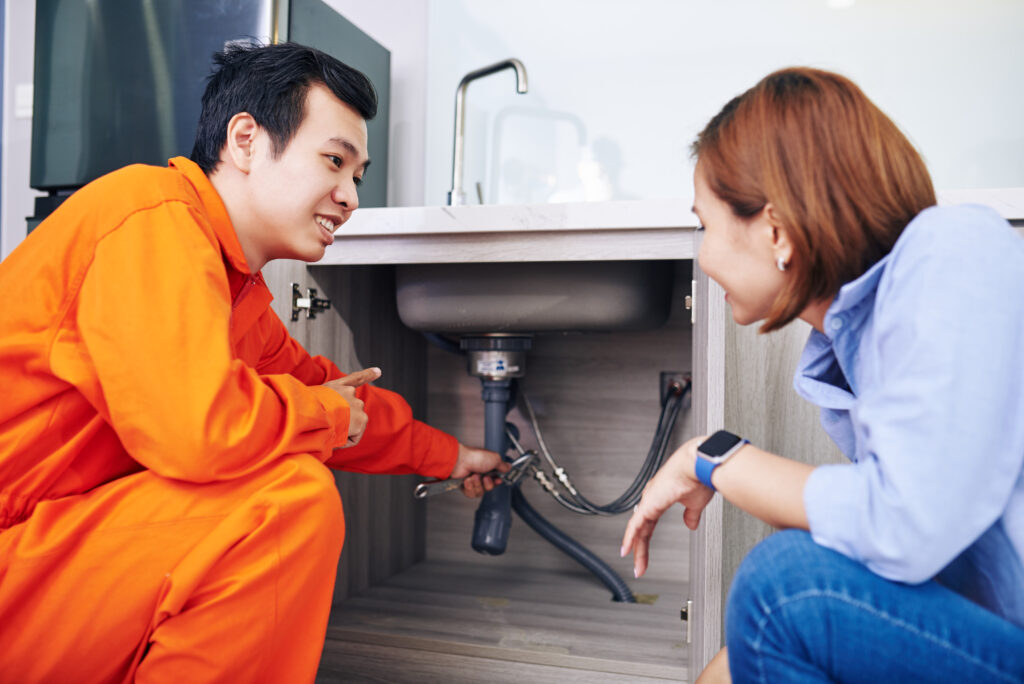
Emergency plumbing services are a bit different from regular ones.
They’re available 24/7 to tackle urgent issues like burst pipes, severe leaks, or overflowing toilets. It’s important to clarify what’s counted as an emergency in the plumber’s eyes, as this can vary between companies.
Additionally, ask about any extra fees for after-hours or weekend services. Emergency work often comes with a higher price tag, so it’s important to understand the pricing structure upfront.
Transparency in pricing will help you avoid any nasty surprises when the bill arrives.
Question #4 – Can you provide references?
Customer references are a valuable resource when choosing a plumber. They provide insight into the plumber’s reliability, quality of work, and customer service.
Ask for a mix of recent and long-term customers to get a comprehensive view of their performance over time. Don’t just take their word for it—verify these references by making a few calls.
A reputable plumber will have no problem providing this information and will likely have a list of satisfied customers ready to vouch for their services.
Question #5 – What’s your hourly rate?
Understanding an emergency plumber’s pricing structure is important before any work begins. Some plumbers charge an hourly rate, while others offer flat rates for specific jobs.
Hourly rates can sometimes be less predictable if the job takes longer than expected, whereas flat rates provide a clear idea of the total cost upfront.
It’s also important to ask about overtime charges, as emergency or after-hours work might come with additional fees.
Being clear on these points will help you avoid unexpected costs and ensure you can budget appropriately for the service.
Question #6 – What’s your warranty or guarantee?
Warranties and guarantees are your safety net in case something goes wrong after the job is done.
A warranty on parts helps you make sure that any faulty components can be replaced at no extra cost, while a labour warranty guarantees the quality of the plumber’s work.
Make sure to ask about the duration of these warranties. Some may last a few months, while others could extend for a year or more.
Knowing this information upfront can save you from potential hassles and additional expenses in the future.
Question #7 – What payment methods do you accept?
Different plumbers accept different payment methods, so it’s important to confirm this information upfront.
Some may prefer cash or checks, while others might accept credit cards or digital payments.
Knowing the accepted payment methods can save you from last-minute scrambles and ensure you’re prepared when it’s time to settle the bill.
Question #8 – Can you provide an estimate?

Getting an estimate before any work begins helps you avoid surprises. An estimate gives you a ballpark figure of what the job will cost, allowing you to budget accordingly.
Be aware of the difference between an estimate and a bid —an estimate is an educated guess, while a bid is a fixed price offer.
It’s also wise to get multiple estimates from different plumbers to compare prices and services. This way, you can make an informed decision and choose the best option for your needs.
Question #9 – How do you handle clean-up?
Plumbing work can be messy, and the last thing you want is to be left with a disaster zone once the job is done. It’s important to ask how the plumber handles clean-up after the work is completed.
A professional emergency plumbing company should take care of removing any debris, old parts, or excess materials and leave your home as clean as they found it. This shows respect for your property and adds to the overall quality of their service.
Question #10 – Do you offer preventative maintenance services?
Preventative maintenance can save you from future plumbing emergencies and extend the lifespan of your plumbing system.
Ask if the plumber offers any maintenance plans or services, such as regular inspections, drain cleaning, or pipe maintenance.
These services can help identify potential issues before they become major problems, providing peace of mind and potentially saving you money in the long run.
Red Flags to Watch Out for When Hiring an Emergency Plumbing Company
When you’re dealing with a plumbing emergency, the last thing you need is added stress from hiring the wrong company.
While some signs are obvious, like a lack of licensing or poor reviews, others can be more subtle.
Here are some red flags to watch out for that might not immediately catch your attention:
The plumber shows up in an unmarked vehicle or without a uniform
Imagine a plumber arriving at your door in an unmarked vehicle, wearing everyday clothes. This might not seem like a big deal at first, but it is something to watch out for.
Reputable plumbing companies typically have branded vehicles and require their employees to wear uniforms. This not only shows professionalism but also ensures accountability.
If the plumber doesn’t have these, it could mean the company is less established or is using subcontractors who aren’t regular employees.
There isn’t a written contract or the paperwork is vague
During a plumbing emergency, it can be easy to forget to ask for paperwork.
If a company avoids giving you a clear, written contract or provides paperwork that’s vague and lacks detail, take it as a warning.
A reliable plumbing company should always provide a written agreement that clearly outlines the scope of work, timeline, and costs involved. I
If they’re hesitant to do so, it might be best to look elsewhere.
There are constant changes in staff or ownership
Frequent changes in an emergency plumbing company’s staff or ownership can be a red flag. High turnover rates might indicate that the company is unstable or poorly managed.
This could mean that employees are unhappy or that the company is facing financial difficulties.
Before hiring, it’s a good idea to ask how long their plumbers have been with the company and if there have been any recent changes in ownership.
They have inadequate equipment or seem disorganized
If a plumber shows up with outdated or inadequate tools and appears disorganized, it’s not a good sign. P
rofessional plumbers should be well-prepared with all the necessary equipment to handle your emergency efficiently.
Being disorganized or poorly equipped could mean they lack the experience or expertise needed to get the job done right, which can lead to more problems down the line.
They are overly casual or unprofessional attitude
While it’s great if the plumber is friendly, an overly casual or unprofessional attitude can be a red flag.
A plumber who doesn’t take your situation seriously might not be thorough in their work or may not prioritise your emergency.
During a stressful situation, you want someone who is focused, respectful and takes the job seriously.
They are reluctant to answer your questions or provide information
If the plumber or company representative hesitates to answer your questions or seems vague when providing information, this could be a warning sign.
A reputable company should be open and transparent about its services, experience, and procedures. If they avoid answering your questions or aren’t forthcoming with details, they might be hiding something or lack confidence in their services.
Find an emergency plumbing company you can trust
By asking the right questions, you’re not just finding someone to fix a leak or unclog a drain—you’re choosing a professional who will handle your home with care and expertise.
In the end, being prepared for a plumbing emergency is all about being a savvy homeowner.
Keep these questions handy, and you’ll be ready to tackle any plumbing disaster with confidence.
Remember, the goal is to find a plumber you can trust, not just for today’s crisis, but for any future plumbing needs. A little bit of preparation now can make all the difference when the unexpected happens.