
Key takeaways
- What to do in a plumbing emergency? First off, stay calm and follow each step carefully. I identify the problem, shut off the water, remove excess water, and decide if you need a plumber.
- Early detection is important. Spotting signs like persistent drips, slow drains, and discoloured water can help prevent a plumbing emergency.
- Always be ready. Creating an emergency kit and knowing where your shutoff valves are can minimise damage during a plumbing crisis.
Plumbing emergencies can strike when you least expect them.
From a burst pipe in the middle of the night to an overflowing toilet just before guests arrive, these situations can quickly turn into a stressful problem.
Knowing what to do when faced with a plumbing emergencies can make a world of difference.
You can minimise damage, save money, and avoid unnecessary stress.
This guide walks you through the essential steps to take and shares some valuable tips on how to be ready for the unexpected.
Step 1 – identify the type of problem you’re facing
The first step in handling a plumbing emergency is to identify what kind of issue you’re dealing with.
Is it a burst pipe spraying water all over the room?
Is there water leaking from the ceiling?
Maybe the toilet is overflowing, or you’ve noticed a strange, persistent gurgling noise coming from the drains.
Recognising the type of emergency can help you determine the appropriate course of action.
For instance, a small leak under the sink might be something you can manage temporarily, while a major burst pipe will require immediate attention. Knowing the difference helps you prioritise your actions and respond effectively to the situation at hand.
Step 2 – turn off the water supply immediately
Once you’ve identified the problem, the next step is to shut off the water supply. This prevents further damage and gives you some breathing room to assess the situation.
Every home has a main water shut-off valve, typically located near the water metre, in the basement, garage, or outside by the street.
Make sure you know where yours is and how to operate it before an emergency occurs.
In some cases, you may also need to shut off the water supply to a specific fixture, such as a sink or toilet.
These individual shut-off valves are usually located near the plumbing fixture itself.
Turning off the water promptly can save you from the frustration and expense of dealing with extensive water damage.
Step 3 – safely remove excess water and protect your belongings
Use towels, mops, or a wet vacuum to clean up standing water. If water has seeped into carpets or rugs, dry these areas as quickly as possible to prevent mould and mildew growth.
Move any furniture, electronics, and personal items out of harm’s way to keep them from getting damaged.
If you have valuable documents or sentimental items in the affected area, prioritise moving these first.
Remember, the faster you act, the less likely it is that your belongings will sustain serious water damage.
Step 4 – assess the situation and decide if you need professional help
Some plumbing issues can be handled with a bit of DIY know-how. However, others will require the expertise of a professional emergency plumber.
If you’re dealing with a significant leak, a burst pipe, or sewage backup, it’s best to call a plumber right away.
Minor issues like a small leak or a slow drain can sometimes be fixed temporarily while you wait for professional help.
However, attempting to fix major problems on your own can often make things worse, leading to more extensive damage and higher repair costs.
Step 5 – contact a professional plumber if necessary
If you find that you need the help of a professional, find a local plumber ASAP
Keep the contact information of a trusted plumber handy so that you can reach out quickly in case of an emergency.
When calling, provide as much detail as possible about the situation to help the plumber understand the urgency and the nature of the problem.
While waiting for the plumber to arrive, continue to monitor the situation. If water starts leaking again or the problem gets worse, you may need to take additional steps to prevent further damage.
Preparing for a plumbing emergency (It’s easier than you think)
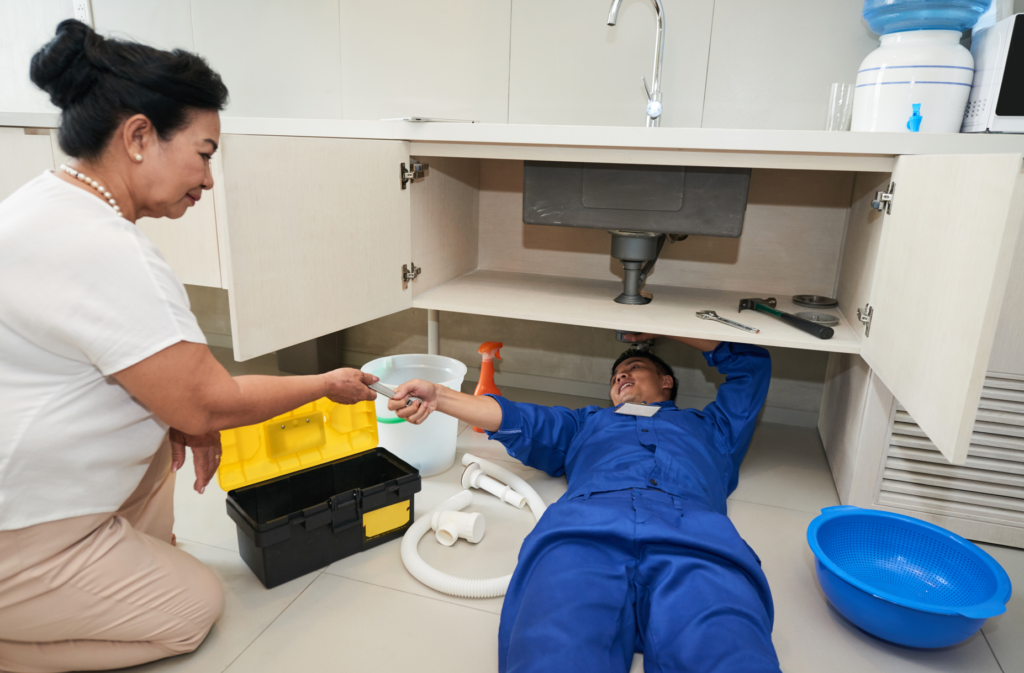
Being prepared for a plumbing emergency doesn’t require a lot of effort. The key is to have a plan in place before things go wrong.
Create an emergency kit
Having a few tools on hand can make a huge difference when trouble strikes.
A basic plumbing emergency kit should include a wrench, plumber’s tape, a bucket, and even a plunger.
These items can help you manage minor issues and keep a situation from spiralling out of control while you wait for professional help.
Know where your valves are
One of the most important things you can do is familiarise yourself with the location of your water shutoff valves.
In the event of a burst pipe or serious leak, turning off the water quickly can prevent extensive damage to your home.
Make sure everyone in the household knows where these valves are and how to use them.
Keep a plumber’s number handy

When a plumbing emergency strikes, the last thing you want to do is scramble to find a reliable plumber.
Having a trusted professional’s contact information saved and easily accessible ensures that you can get help fast.
Don’t wait until you’re in the middle of a crisis to start searching for someone reputable.
Maintain regular plumbing inspections
Prevention is always better than cure. Schedule regular plumbing inspections to catch potential issues before they become emergencies.
A plumber can identify small problems and provide services like leak detection. This way, you get to avoid bigger issues down the line.
Remember, a little preparation goes a long way.
By taking these simple steps now, you’ll be ready to handle a plumbing emergency with confidence and keep the damage to a minimum.
Stay calm and stay prepared
Handling a plumbing emergency can be stressful, but knowing what steps to take can make all the difference.
Removing excess water, assessing the situation, and contacting a professional plumber if needed can minimise damage and protect your home.
Preparation is also key.
With this knowledge and preparation, you can handle any plumbing emergency calmly and confidently.