
Key takeaways
- Start with boiling water and a plunger for easy clogs.
- For deeper clogs, use a drain snake, and be careful when using chemicals.
- When DIY fails, call a professional blocked drain plumber to prevent serious damage or backups.
Clogged drains are a universal problem for every home. Almost everyone has had a slow-moving sink or a backed-up toilet.
Ignoring it isn’t an option because the problem won’t disappear.
If you wait too long, you might find yourself dealing with more than just standing water.
The good news is learning how to unblock clogged drains is not a secret.
Simple tools and household items can do wonders for sinks, tubs, and toilets. All it takes is the know-how of what to look out for and what to do.
However, it’s not always a DIY job.
If your clogged drain is proving to be quite stubborn, professional drain cleaning services are there to help.
Warning signs your drains are about to clog up
You don’t want to wait until your drain is completely blocked. Catching the clog early can save you from much bigger problems later on.
More than knowing what causes blocked drains, you should know the warning signs that signal you’re drain is about to clog.
Slow drainage
If water is taking longer than usual to go down the drain, it’s a sign of a partial blockage. Hair, food, or soap scum can be building up. This is usually the easiest way to spot a clogged drain.
Gurgling sounds
Listen for strange noises coming from your pipes. That’s air trapped by a clog trying to escape.
That’s usually telltale sign that something is possibly blocking the flow of water and liquids going down the drain.
Foul odours
Bad smells wafting up from your drain are never a good sign. It means something unpleasant — like food or grime — is stuck and starting to decompose.
Frequent backups
If you’re dealing with recurring backups in your sink or if keep having to drain a blocked toilet, it’s likely more than just a small blockage. There could be something much deeper in the pipes that are causing problems.
By keeping an eye out for these early signs, you can address the issue before it turns into a full-on clog.
Acting early saves you time and avoids the hassle of dealing with a bigger blockage later.
How to unblock clogged drains
Method #1 — use boiling water
Sometimes, the simplest solution is the best.
Boiling water can be a quick, cheap way to clear light blockages caused by grease, soap scum, or mild buildup in your pipes.
What to do: Boil a full kettle or pot of water. Slowly pour it down the drain two or three times, allowing each pour to work its way through.
Give the water time to do its job between pours. This allows the buildup to dissolve and move down the drain between each pour.
When to use it: This method works best for kitchen sinks or bathroom drains that are draining slowly but not completely clogged.
If water is still moving, even slowly, this method can help clear the way.
Why it works: Grease, soap, and other buildup can harden over time in your pipes.
Boiling water clears up light blockages by breaking down the gunk and letting it flow through the drain. It’s simple, fast, and will cost you next to nothing.
Keep in mind that boiling water won’t work for all clogs, especially ones caused by solid objects or hair.
But as a first step, it’s worth a try before moving on to other methods.
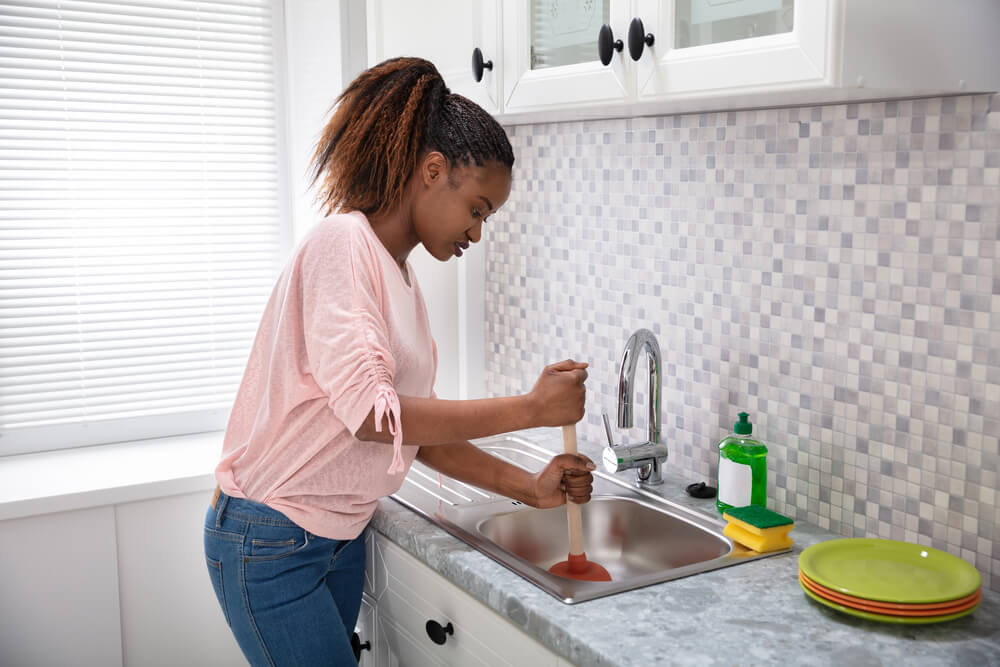
Method #2 — the old, reliable plunger
The simple plunger is great for more than just unclogging toilets. It’s surprisingly effective on sinks and tubs too.
If you’re dealing with a shallow clog, this handy tool might be all you need.
What to do: First, make sure there’s enough water in the sink or tub to cover the bottom of the plunger. Place the plunger over the drain and push down firmly to create a seal.
Then, use a forceful push-pull motion. The suction and pressure created by the plunger will help dislodge whatever’s clogging the drain.
When to use it: The plunger works well for shallow clogs, whether it’s a blocked toilet, a slow-draining sink, or a backed-up bathtub.
It’s useful for clogs that haven’t been stuck for too long or aren’t too deep in the pipes.
Pro tip: For sinks and tubs, use a flat-bottomed plunger (also called a sink plunger) rather than a toilet plunger, which has a cup-shaped design.
The flat-bottomed version works better on flat surfaces like the base of a sink or tub, providing a tighter seal for more effective plunging.
A plunger is a simple, non-chemical method that doesn’t risk damaging your pipes.
While it won’t tackle the toughest blockages, it’s often a reliable partner when faced with a stubborn drain that won’t budge.
Method #3 — use drain snakes for deeper clogs
When plunging doesn’t get the job done, it’s time to bring out the drain snake (also known as an auger).
This tool is designed to deal with clogs that are deeper in your pipes, out of reach of plungers or boiling water.
What to do: Insert the snake into the drain until you hit resistance — this is the clog. Once you’ve found it, twist the handle to grab or break up the blockage.
Slowly pull the snake out, hopefully bringing the clog with it. If needed, repeat the process until the drain clears.
When to use it: Drain snakes are perfect for clogs that are further down the pipe and can’t be dislodged with a plunger.
They’re particularly useful in sinks, toilets, and bathtubs where hair, food, and other debris can build up deep in the plumbing.
Why it works: A drain snake works by twisting and breaking up whatever’s clogging the drain. It’s great for tough clogs caused by hair, food, or other debris. When chemicals or plungers don’t do the trick, the snake usually will.
You can find affordable manual drain snakes at most hardware stores, and they’re usually more than enough for most household clogs.
However, if you’re dealing with a particularly stubborn blockage, investing in an electric drain snake can save you time and effort.
While manual snakes require some elbow grease, electric ones do all the heavy lifting for you, making it easier to clear tougher blockages.
Whether manual or electric, a drain snake is a handy tool for any homeowner dealing with persistent clogs that just won’t budge.
Method #4 – try cleaners to break down tougher clogs
When boiling water and plungers can’t seem to do the trick, caustic drain cleaners can be your next move.
These are powerful chemicals that can dissolve tougher blockages that are clogging your pipes.
What to do: Head to your local hardware store and pick up a caustic drain cleaner.
Carefully read the instructions on the label and make sure the room is well-ventilated. These chemicals aren’t something you want to breathe in.
Pour the recommended amount down the drain and let it sit for the time suggested before flushing with water.
When to use it: If your drain still isn’t clearing after trying boiling water or plunging a caustic cleaner can be the solution.
It’s effective on stubborn clogs, especially in kitchen and bathroom drains where grease and hair build up over time.
What to avoid: Be careful with how often you use these cleaners. Overusing them can damage your pipes, especially if you have older plumbing.
Never mix different chemical cleaners, as the reaction could be dangerous and potentially harmful to you and your home.
Caustic cleaners should be your last-ditch effort before calling a professional. Chemical drain cleaners can tackle tough clogs, but using them too often can damage your pipes over time. Use them sparingly, and if the clog sticks around, it’s time to call professional plumbing services.

Method #5 — call the professionals when DIY isn’t enough
Sometimes, no amount of plunging, boiling water, or snaking will clear a clog. When that happens, it’s time to call in the professionals.
They have specialised tools and techniques that can handle even the most stubborn blockages and all their underlying issues.
Hydro jetting: This method uses a high-powered stream of water to blast through blockages. It’s especially effective against grease buildup, tree roots, and other large and heavy debris that might be clogging your pipes.
The intense pressure not only clears the clog but also scrubs the inside of your pipes, cleaning it to prevent blocked drains.
When to call a professional plumber: If you’re dealing with recurring clogs, slow drains in multiple areas of your home, or worse—sewage backups—it’s time to call in professional help.
These issues could point to a more serious problem, like a collapsed pipe or severe buildup, which requires tools and expertise beyond DIY methods.
Professional plumbers not only have the skills to fix the immediate problem, but they also have the expertise to identify and address the underlying causes of your clogs.
By getting to the root of the issue, they can help prevent future blockages, saving you from additional stress and potentially costly repairs down the road. When DIY fixes aren’t cutting it, calling in professional plumbing services in Brisbane is worth every penny.
Don’t wait for the worst to happen
Clogged drains are one of those household issues that often get ignored until they turn into a bigger problem.
By the time water is backing up, or you’re dealing with a foul odour, you’re already in trouble. It’s important to catch the issue early and know which solution to try first.
Start with the basics.
Boiling water and a plunger are your best bets for simple blockages. If that doesn’t work, a drain snake can handle the deeper, tougher clogs.
But when DIY methods aren’t enough, don’t hesitate to call in the professionals. They have the tools and expertise to clear major blockages and prevent future ones.
Recurring clogs or slow drains throughout your home are signs of a bigger problem.
Waiting too long to deal with it can result in costly damage or, worse, sewage backups.
Get ahead of it — fix the issue before you’re knee-deep in water and headaches.